



January 2026



FIRST PERSON
MONEY MATTERS
TECH TALK
DEPARTMENTS
January 2026 • VOL. 43 • NO. 1

FEATURES
UHDI Foundations
It’s not “smaller HDI” but rather a different approach to manufacturing the copper structures themselves, which matters for designs with very fine-pitch BGAs, dense routing channels or demanding RF and high-speed nets.
by Anaya Vardya
Stackup Essentials
Proper circuit design can be undone by a poorly planned stackup. The construction of a board and the impact of taking a considered approach.
by Akber Roy
Marketplace Mechanics
A new platform offers a conduit between companies with excess inventory and the buyers who need them.
by Ryann Howard
Stencil Performance (cover story)
How do modern stencil materials and coatings influence transfer efficiency and volume repeatability as SMT features continue to shrink?
by Chrys Shea
ON PCB CHAT (pcbchat.com)
with Raymond Novara
with Mike Konrad
with Daniel Stanphill and Sean Kincaid




PCEA
PO BOX 807
AMESBURY, MA 01913
PCEA BOARD OF DIRECTORS
Stephen Chavez, CHAIRMAN
Susy Webb, VICE CHAIRMAN
Justin Fleming, SECRETARY
Anaya Vardya, TREASURER
MEMBERS
Jim Barnes
Michael Buetow
Tomas Chester
Douglas Dixon
Juan Frias
Richard Hartley
Matthew Leary
Charlene McCauley
Eriko Yamato
pcea.net
PUBLICATION
- PCD&F/Circuits Assembly digital.pcea.net
WEBSITES
- PCD&F pcdandf.com
- Circuits Assembly circuitsassembly.com
NEWSLETTER
- PCB Update pcbupdate.com
PODCASTS
- PCB Chat pcbchat.com
EVENTS
- PCB West pcbwest.com
- PCB East pcbeast.com
- PCB Detroit pcea.net/pcb-detroit
EDUCATION
- PCB2Day pcb2day.com
- PCEA Training pceatraining.net
- Printed Circuit University printedcircuituniversity.com
AWARDS PROGRAMS
- Service Excellence Awards circuitsassembly.com
- NPI Awards pcea.net/npi-award


MANAGEMENT
PRESIDENT
Mike Buetow 617-327-4702
mike@pcea.net
mike@pcea.net
VICE PRESIDENT, SALES & MARKETING
Frances Stewart 770-361-7826
frances@pcea.net
frances@pcea.net
COLUMNISTS AND ADVISORS
Jeffrey Beauchamp, Peter Bigelow, Robert Boguski, John Burkhert, Jr., Stephen Chavez, Mark Finstad, Geoffrey Hazelett, Nick Koop, Jake Kulp, Alun Morgan, Susan Mucha, Greg Papandrew, Chrys Shea, Jan Vardaman, Gene Weiner
PRODUCTION
ART DIRECTOR & PRODUCTION
blueprint4MARKETING, Inc.
production@pcea.net
production@pcea.net
Nathan Hoeller
nathan@pcea.net
nathan@pcea.net
SALES
VICE PRESIDENT, SALES & MARKETING
Frances Stewart 770-361-7826
frances@pcea.net
frances@pcea.net
Senior Sales Executive
Will Bruwer 404-313-1539
will@pcea.net
will@pcea.net
REPRINTS
EVENTS/TRADE SHOWS
EXHIBIT SALES
Frances Stewart 770-361-7826
frances@pcea.net
frances@pcea.net
TECHNICAL CONFERENCE
Mike Buetow 617-327-4702
mike@pcea.net
mike@pcea.net
SUBSCRIPTIONS
PRINTED CIRCUIT DESIGN & FAB/CIRCUITS ASSEMBLY is distributed without charge to qualified subscribers. To subscribe, visit pcdandf.com or circuitsassembly.com and click on Subscribe.
For changes or cancellations to existing subscriptions: subscriptions@pcea.net
PRINTED CIRCUIT DESIGN & FAB/CIRCUITS ASSEMBLY is published monthly by Printed Circuit Engineering Association, Inc., PO Box 807 Amesbury, MA 01913. ISSN 1939-5442. GST 124513185/ Agreement #1419617.
© 2026, by Printed Circuit Engineering Association, Inc. All rights reserved. Reproduction of material appearing in PRINTED CIRCUIT DESIGN & FAB/CIRCUITS ASSEMBLY is forbidden without written permission.

THE ROUTE

MIKE
BUETOW
BUETOW
PRESIDENT
When the Robots Stop: From San Francisco, a Cautionary Tale
Many years ago, in The Dark Knight, Batman’s nemesis the Joker famously observed that nobody panics when things go “according to plan – even if the plan is horrifying.” It’s when the unexpected happens that chaos erupts.
San Francisco got a taste of that chaos in late December when a power outage brought the city’s fleet of Waymo autonomous vehicles to a standstill. For hours, the self-driving cars sat motionless at darkened intersections, hazard lights blinking, blocking traffic and stranding frustrated drivers. Social media lit up with videos of the gridlock. Tow trucks worked overtime. And the ride-hailing service that had been touting its superior safety record was forced offline.
Let’s be clear: Waymo’s safety statistics are impressive. According to the company, its autonomous vehicles have 90% fewer serious injury crashes, 82% fewer airbag deployments and 81% fewer injury-causing incidents compared to human drivers over the same distance. Dr. Jonathan Slotkin, a Pennsylvania neurosurgeon and trauma specialist who analyzed Waymo’s data, suggests that if just 30% of cars were fully automated, we might prevent 40% of crashes. That’s a compelling case for autonomous vehicles.
READ FULL ARTICLE
Around the World
news
Quilter AI Tool Lays Out Complete Computer Design in Less than Week, Company Says
LOS ANGELES – Quilter in December announced the creation of a printed circuit board design for a computer using artificial intelligence tools in under a week.
The startup company, founded in 2019 by former SpaceX engineer Sergiy Nesterenko, said a single engineer completed the layout taking a schematic to manufacturing-ready files in less than a week, a process that traditionally takes an entire engineering team months and requires multiple rounds of redesign. This initiative, called Project Speedrun, represents a major milestone for the hardware industry, demonstrating an ability to compress quarter-long hardware R&D cycles into rapid weekly experiments.
Project Speedrun based its computer design around the widely used NXP i.MX 8M Mini processor, the same embedded computing hardware commonly used in automotive infotainment, safety and machine-vision systems. The system was fully functional upon first boot, capable of handling the demands of video calls, video games and more – a rare outcome in printed circuit board design, where projects typically build in as many as 3-5 respins when scoping.
READ FULL ARTICLEGuangzhou Guanghe Technology Files for Hong Kong IPO
HONG KONG, CHINA – Guangzhou Guanghe Technology has submitted its prospectus to the Hong Kong Stock Exchange, seeking a main-board listing with CITIC Securities and HSBC acting as joint sponsors.
According to its prospectus and third-party data from Frost & Sullivan, Guanghe ranked third globally and first among China-headquartered manufacturers by cumulative revenue from computing server PCBs between 2022 and 2024. Server-related products now account for more than 70% of total revenue, reflecting strong demand tied to AI workloads, data center expansion and high-performance computing.
The company operates major manufacturing bases in Guangdong and Hubei provinces and supplies both OEM customers and electronics manufacturing services providers through a direct sales model. 
US-China Economic & Security Review Commission Highlights Need for American-Made PCBs
WASHINGTON – The US-China Economic and Security Review Commission has released its 2025 Report to Congress, warning that decades of offshoring PCB manufacturing have sharply eroded domestic capacity. According to the report, US PCB production in output value has fallen from roughly 30% of global supply in 2000 to just 4% today.
The Commission emphasized that semiconductors used in national defense, critical infrastructure and commercial systems all rely on PCBs as their foundational platform. It flagged US dependence on foreign suppliers, particularly China, which now accounts for approximately 60% of global PCB production, as a strategic vulnerability.
While current US defense needs are still supported by domestic manufacturers, the report noted that defense demand alone is insufficient to sustain a modern PCB industrial base. As a result, the United States lacks the capacity to scale production rapidly in response to national or economic security needs.
Read Full ArticleLooming Substrate and Materials Shortages for Advanced Packaging, TechSearch Warns
AUSTIN, TX – Rapid growth in AI servers and data center hardware will push substrate demand beyond available capacity by 2028, forcing manufacturers to expand production within the next three years, according to a recent report from TechSearch International.
Advanced Packaging Update highlights rising pressure on substrate materials – especially glass fiber used in core constructions – and evaluates potential alternatives as supply tightens.
The analysis also compares projected high-bandwidth memory (HBM) demand against planned capacity, noting widening gaps as AI accelerators scale. A dedicated section examines hybrid bonding adoption, equipment requirements, and competing fine-pitch interconnect approaches now entering development.
Foxconn to Invest $170M to Build Electronics Manufacturing Plant in Louisville
LOUSIVILLE, KY – Foxconn in December confirmed plans to establish a US production hub in Louisville, announcing a $170 million investment that will bring 180 new jobs to the region. The project is being supported by Kentucky Economic Development Finance Authority incentives for the company.
The company expects production to begin in the third quarter of next year.

Incap Buys Lacon in $54M Deal, Expands Defense and Design Services
HELSINKI – Incap has signed an agreement to acquire 100% of Germany’s Lacon Group in a transaction valued at $54.2 million, marking an expansion of the Finnish EMS provider’s presence in Europe and growing its position in fast-growing defense and industrial markets.
Lacon Group operates EMS and ODM facilities in Germany and Romania totaling roughly 21,300m². Its offering includes PCB assembly, cable harnessing, box build, system integration and design and testing services, which are capabilities that expand Incap’s scope beyond manufacturing and into full product-development support. For the first 10 months of 2025, Lacon reported unaudited revenue of $61.8 million.
The purchase price will be paid in cash and funded through Incap’s own reserves and a bank loan of about $32.5 million. An additional earn-out of up to $5.4 million may be paid in 2027 based on Lacon’s 2026 financial performance. Closing is expected in the first quarter of 2026 pending foreign-investment approvals in Germany and Romania.
Read Full ArticleMicro-Precision Technologies Acquires Stellar Manufacturing
SALEM, NH – Micro-Precision Technologies has acquired Stellar Manufacturing, adding PCB assembly capabilities to its US microelectronics platform. The deal, which closed in early October, builds on MPT’s partnership with Great River Capital Partners and supports its expansion across defense, aerospace, medical and commercial markets.
Stellar’s Salem, NH, operation will continue serving customers. MPT said the acquisition combines Stellar’s PCBA expertise with its own hybrid, multichip module and thick-film technologies.
Around the World
briefs
PCD&F
AGY will invest $12 million to expand specialty glass fiber production at its Aiken County, SC, facility, adding 80 jobs and increasing capacity for materials used in semiconductor packaging and high-performance printed circuit boards. Operations are expected to begin in early 2026.
Calumet Electronics installed a Schmid Infinity H+ developer.
Celus announced electronic component supplier AGS Devices has officially gone “live” with the Celus Design Platform, an AI-assisted electronics design platform.
Doosan Electro-Materials is reportedly positioned to become the sole CCL supplier for Nvidia’s upcoming Rubin AI platform.
Ecarx has partnered with Victory Giant Technology to scale production of high-performance automotive computing platforms.
Read Full ArticleCA
AIM Solder appointed RMG Vietnam authorized distributor in Southeast Asia.
Amber Enterprises India has completed the acquisition of a majority stake in Pune-based Shogini Technoarts.
Coherix opened a new vision center in Sinsheim, Germany.
Critical Manufacturing partnered with Canonical to expand cloud-native MES deployment options across cloud, hybrid and on-premises manufacturing environments.
Foxconn and Luxshare plan to expand Vietnam’s game console manufacturing capacity by several million units per year as both firms seek permits for large production increases across Northern Vietnam.
Read Full Article
Around the World
PEOPLE
PCD&F


AdvancedPCB named Lisa Holmes director of global marketing.
AT&S appointed Gerrit Steen chief financial officer.
Blue Origin named Chris Sadler senior PCB designer.
Dan Beeker has retired from NXP and has assumed the role of president and CTO at System Solution Specialists.
Draper named Denis Boulanger principal engineer DFM PCB/CCA.
CA


Helios Technologies promoted Billy Aldridge to president, electronics segment.
Keith Howell, technical director at Nihon Superior USA, passed away in December.
Naprotek appointed Tim Filteau chief executive officer.
Neways named Sascha Brüning vice president defense.
Kimball Electronics promoted Andrew Regrut, the company’s treasurer and investor relations officer, to lead strategic development efforts.

PCEA current events
national news
PCB West Booth Space Now Open to Any Exhibitor
 PEACHTREE CITY, GA – The exhibition floor for PCB West 2026 is now open to any prospective exhibitor. The exhibit floor is expected to sell out, as it has in 11 of the past 12 years.
PCB West will be held Sept. 29 to Oct. 2, 2026, at the Santa Clara (CA) Convention Center. The event includes a one-day exhibition on Sept. 30.
Booth sales opened in early November to returning exhibitors, and the exhibit floor is currently over 60% sold out.
Read Full ArticlePCB East More than 70% Sold Out
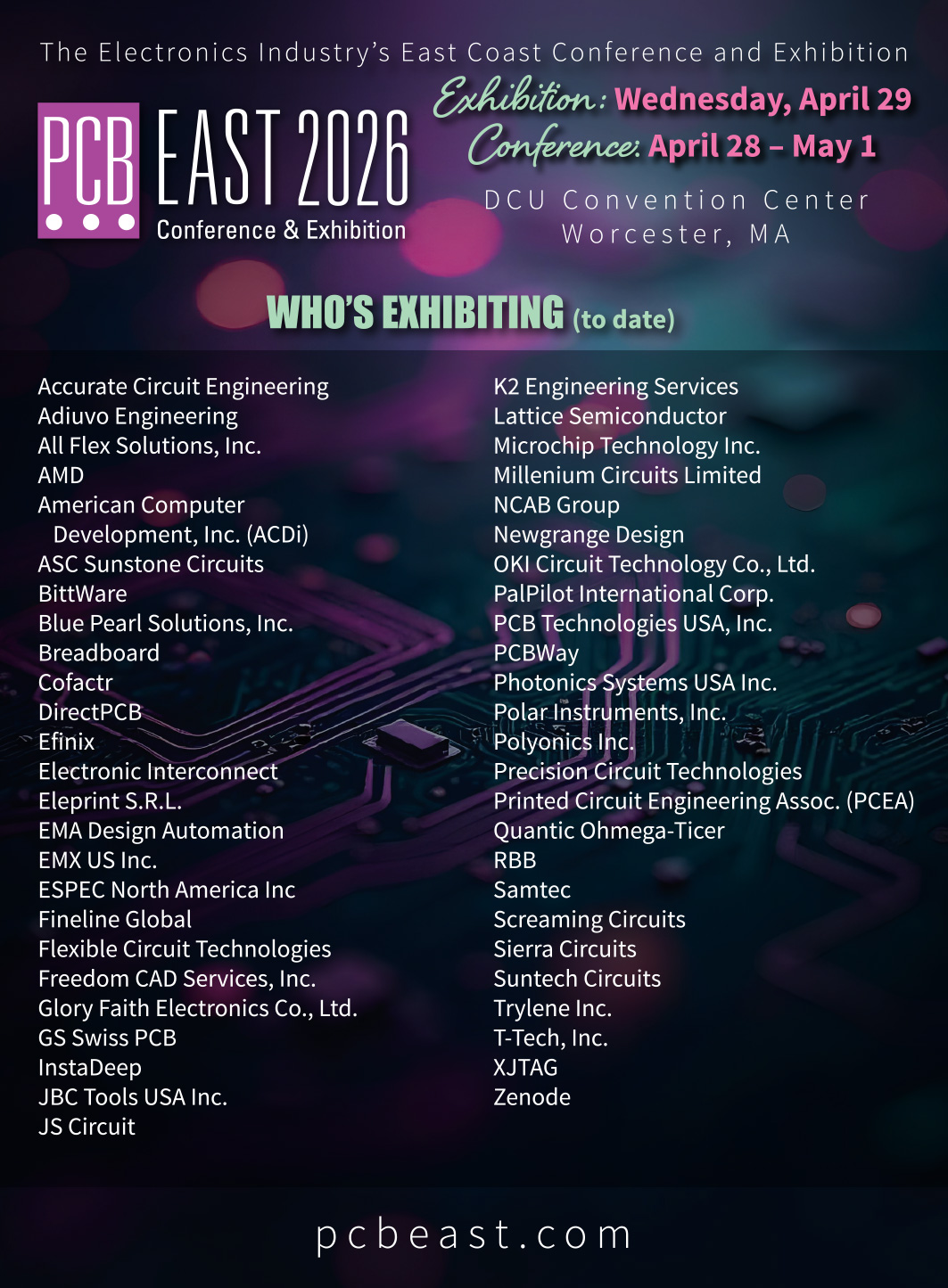
 PEACHTREE CITY, GA – The exhibition floor space for PCB East 2026 is more than 70% booked and is expected to sell out. The one-day exhibition will be held Apr. 29 at the DCU Center in Worcester, MA, with a four-day conference taking place Apr. 28 – May 1.
“Since its return in 2021, PCB East has sold out each year, and we fully expect it to do so again,” said Frances Stewart, vice president of sales and marketing, PCEA. “Attendance at the show was up 15% in 2025, and attendees have noted the access to vendors and each other as the primary reasons why they come to PCB East.
“With the exhibit floor selling out quickly for PCB East, we look forward to another outstanding event for the printed circuit engineering community in 2026.”
Read Full ArticleRegistration for PCB East Conference to Open this Month
PEACHTREE CITY, GA – Registration for the PCB East 2026 conference and exhibition will open this month. PCB East will feature more than 65 hours of design and manufacturing classes, plus another 18 hours of assembly courses during the four days starting in late April.
In addition, this year’s event will offer a two-day, two-track conference on FPGA, produced by FPGA Horizons.
The 2026 conference takes place Apr. 28 – May 1 at the DCU Center in suburban Boston.
Read Full ArticleSpring PCB Design Training Classes Scheduled
 PEACHTREE CITY, GA – Registration is open for the next PCEA Training Certified Professional Circuit Designer (CPCD) training and certification classes.
Upcoming sessions are
- Feb. 6, 13, 20, 27, and Mar. 6. Registration closes Jan. 9.
- May 15, 22, 29, Jun. 5 and 12. Registration closes Apr. 16.
The 40-hour instructor-led course is designed for printed circuit engineers, layout professionals and other individuals currently serving in the design engineering industry or seeking to get into it.
Read Full Articlepcea current events
ASSOCIATION NEWS
Certification. The following recently passed the PCEA Certified Printed Circuit Designer exam:
- John Andorf
- Joshua Cruz
- Michael Dauphinai
- Javier Feliciano
- Sean Welch
Conferences. PCB Detroit will return to the campus of Wayne State University on Jun. 15-16, 2026. More details will be forthcoming at pcea.net/events.
Networking. The PCEA Discord server brings together engineers and designers from around the world on a private channel to discuss technical questions and career opportunities. To join, contact PCEA. Recent conversations covered the implementation of copper pours, design reviews and low-voltage differential signals.
CHAPTER NEWS
Richmond, VA. Our next in-person meeting is being planned for January, possibly with a presentation on manufacturing tests. Contact Michael Burns for details.
Portland, OR. Our next chapter meeting will be held online on Jan. 22. The tentative topic is thermal issues and thermal management. Contact Stephan Schmidt for details.
Market Watch
Advanced Packaging Market Set to Double by 2034
OTTAWA – The advanced packaging market is poised for explosive growth over the next five years, driven by AI, high-performance computing and the insatiable demand for smaller, faster electronics, a new report asserts.
According to new research from Towards Packaging, the global advanced packaging sector will climb to $78.8 billion by 2034 from $40.3 billion in 2025 – a compound annual growth rate of 7.6%. (more)

Hot Takes
Taiwan’s sales of rigid printed circuit boards rose 16% year-over-year in November. (TPCA)
The US Pentagon has launched a $1 billion program to build an industrial base for attack drones. (US government)
Worldwide foldable smartphone shipments are forecast to grow 10% year-over-year in 2025 to 20.6 million units. (IDC). (more)

roi

Peter
Bigelow
Bigelow
AI Demand Echoes the Late-’90s Tech Surge
Memory chip shortages and PCB order spikes signal strength, but history suggests caution amid the hype.
It appears that possibly, as baseball legend Yogi Berra would have said, it’s déjà vu all over again.
Reuters reports that the AI (artificial intelligence) frenzy is creating a major shortage of memory chips, used in everything from consumer electronics and industrial equipment to computers and even the most advanced military systems. Concurrently, the Global Electronics Association (IPC) reported that printed circuit board bookings and shipments surged during October. While both announcements suggest that the electronics industry is alive and well, could they also be a forewarning that we are heading toward the same euphoric economic environment that occurred in the late 1990s?
For the electronics industry, the late 1990s was the best of times, until they weren’t. PC power was growing by leaps and bounds, creating constant demand for the latest iteration. The internet was in its infancy, creating an insatiable demand for servers and all the infrastructure required to harness emerging technology and enable users to take full advantage of the nascent web. The dot-com frenzy was upon us. Add to that the fear that Y2K, the millennial bug, would render older computers and analog technologies inoperable, which prompted further demand for new, compliant equipment. Demand for all things electronic, and the printed circuit boards and assemblies that the new technology was built on, was skyrocketing, and company revenues and profits were soaring.
Read Full Article
FOCUS ON BUSINESS

Jake
Kulp
Kulp
Lessons From My Worst Sales Hires
You’re going to make some mistakes!
Having led different-sized sales forces over the years, I’ve made some massive hiring mistakes. This isn’t a “how to avoid all hiring mistakes” piece; everyone will make hiring errors over a long and active career. It is how you respond to those mistakes that can make a big difference in your company.

Some of my mistakes:
- A top East Coast sales manager had an impeccable resume and a history of accomplishments. All his references checked out, and he passed my multiple-stage interviews with his peers and me. Every response was spot-on, demonstrating an uncanny knowledge of our business, and he seemed perfect. At my board meeting, as I was preparing an offer, I advised the board of my concerns that he seems “too good” to be true, but we would know in 90 days. Without too much detail, we began to see issues in the 60-day period, and when 90 days were almost up, I was preparing a termination. He resigned on day 89, having accomplished nothing we jointly set out as a plan for him.
Designer’s Notebook

John
Burkhert, Jr.
Burkhert, Jr.
Reviewing the PCB Design Review Process
A structured design review process ensures alignment across teams.
One thing is certain about printed circuit board design: change is inevitable. The vernacular surrounding the art and science of PCB design gives credence to this statement. Upfront, it’s a schematic editor that leads to a layout editor. If you get far enough downstream, you’re working with a Gerber editor. Across the board, the notion of making changes is distilled into the process.

Another axiom in effect is: “If it works, don’t break it.” This sentiment is especially strong where a circuit must be qualified through a regulatory body. If a radio meets the requirements, it’s as if it were written in stone rather than copper. Change is for the better unless it adds unreasonable risk or lengthens the schedule.
Read Full Article
Material Gains

Alun
Morgan
Morgan
The AI Boom is Driving Technological Change at Every Level, Reshaping Supply Chains and Business Strategies
AI investment shows no signs of slowing, prompting concern about what happens when it eventually does.
Victor Huang has described ChatGPT’s arrival as AI’s “iPhone moment,” when the technology’s potential to change the way we live became clear to all. Indeed, the publication of large language models (LLMs) is arguably the most powerful innovation we have seen so far, enabling widespread user engagement spanning personal and professional purposes. Resulting from this, acceptance has snowballed and more and more of us have come to trust and rely on AI assistants. In turn, mainstream use has driven further improvements, as successive updates have delivered more humanlike interactions and additional capabilities.
Within a short space of time, it seems, an AI-based solution has become available for almost everything. In some of the most contentious examples, AI is giving us original novels, including new works in the style of our favorite authors, and virtual film stars. At the same time, the Albanian government has even put an AI – complete with a traditionally dressed avatar – in charge of its national procurement department. On a more day-to-day level, many of us are discovering how much we need the skills AI can bring to our lives, for finding information on the Internet, organizing our digital content, taking better selfies and fulfilling job responsibilities.
On the one hand, edge AI and tiny machine-learning (ML) applications, while on the other, cloud data centers are where we find the heavy lifting for social media, business applications, and intensive analytics. The AI data center server market has become a huge opportunity for equipment vendors as operators upgrade their data centers to meet the explosion in end-user demand. Already worth almost $300 billion, currently representing 17% of the total server market by value, it’s predicted to grow another 20% in 2026.
Read Full Article
Board Talk

Jeffrey
Beauchamp
Beauchamp
Metal-Core PCBs and Thermal Management
Catch heat at the board before it turns into a full-time job.
Heat sneaks up fast in today’s electronics. Higher power density, smaller form factors and long-life reliability expectations all collide, requiring better thermal design. The teams that come out on top with this challenge are the ones who solve heat at the PCB level rather than trying to fix it later with a bigger heat sink or more airflow.
PCB products designed for this level of thermal management generally fall into two categories. The first is metal-base, often called IMS or insulated metal substrate. The second is metal-core. In both variations, the technology turns the familiar idea of a printed circuit board into an active part of the thermal system, rather than expecting FR-4 to carry the load. FR-4 is an excellent structural and electrical material, but it is not a thermal material.
IMS and metal-core types are often referred to interchangeably, and while they share many common traits, there are a few distinct differences worth understanding before choosing one over the other. With MC PCBs, for instance, the heat has a direct path into a metal substrate, such as aluminum or copper. This puts the thermal solution right beneath the components that generate the temperature rise. By permitting the PCB to act as a direct heat distributor, designs become more compact, more predictable, and often lower cost overall. It also buys a lot of reliability margin, especially in LED lighting, power electronics and automotive systems, where junction temperature directly translates to product life.
Read Full Article

Data Transfer

Hemant
Shah
Shah
Bidirectional Design Data Exchange and Technical Query Management with IPC-2581
How the industry standard revolutionizes PCB collaboration.
Last month’s column talked about a simpler way to exchange stackups with manufacturing partners. This month, continuing the theme of migrating from handoffs to bidirectional design data exchange, we will talk about electronic exchange of technical queries with design/manufacturing partners through IPC-2581’s DfX module. The module may be included within the design data or exist independently, such as a stackup exchange module that can be shared separately.
In the AI age, why does anyone need this? There is a smarter, better way to exchange technical queries – by using IPC-2581 DFM exchange module. Adopting IPC-2581’s DFx module transforms the way PCB designers and manufacturing engineers collaborate, replacing manual, error-prone processes with streamlined, electronic communication. This approach accelerates new product introduction, reduces mistakes and enables both sides to track and learn from every exchange. By making technical queries (TQs) and DfM feedback easy to send, review and act on, IPC-2581 creates a win-win environment for design and manufacturing teams.
Let’s examine how technical query data is shared between designers and manufacturers. Then we will review how the same process of exchanging TQs will work with IPC-2581.
Read Full ArticleUHDI Foundations
Ultra HDI: What is It and How is It Different than HDI?
With ultra-high-density interconnect design, small features come with big decisions.
by Anaya Vardya
Ultra HDI (UHDI) has become a prominent part of the PCB design conversation, often presented as “the next frontier” in density and miniaturization. But before we move on to advanced routing strategies and design techniques, let’s establish a solid practical foundation. What is the difference between UHDI and the HDI processes, which so many designers have already learned to rely on? Why does the shift in the underlying process matter, and when does it become worth incorporating into mainstream design work? We will address those questions here.

What Ultra HDI Actually Means
Most designers are well-acquainted with traditional HDI: laser-drilled microvias, 3–4 mil line/space and the lamination cycles required to build stacked or staggered microvia structures. For many years, this combination carried us comfortably through 0.8mm and 0.65mm pitch devices, meeting the rising expectations of high-speed digital architectures.
Read Full Article
Stackup Essentials
The Critical Nature of PCB Stackup, and How to Build an Efficient One
Like a building foundation, the stackup supports every layer above it.
by Akber Roy
The way the printed circuit board layers shown in Figure 1 are arranged is called a stackup. It’s one of the most important constructs in a PCB design. In many ways, it’s configured just like the foundation of a building. If the stackup is weak or poorly planned, for example, everything built on it will suffer from instability, no matter how good the circuit design is.

Why the PCB Stackup Matters
As noted, proper circuit design can be undone by a poorly planned stackup. Here are some ways to think of how the board is constructed and the effects of a thoughtful approach.
Read Full ArticleMarketplace Mechanics
The Marketplace for Untapped Inventory
Where excess inventory stops being clutter and starts being currency.
by Ryann Howard

For years, companies have treated excess electronic components like an embarrassing secret. They get over-purchased, boxed up and quietly written off – destined for the trash, the gray market or whatever corner of the warehouse no one wants to inventory.
And according to startup founder Margaret Upshur, the bill for that silence is massive.
“We’re talking about $15 billion of chips across the whole industry getting thrown away annually,” she says. “That is the size of many very robust, full industries, just the amount that’s being thrown away.”
Read Full Article
Stencil Performance
A Comparison of Stencil Capabilities
How do modern stencil materials and coatings influence transfer efficiency and volume repeatability as SMT features continue to shrink?
by Chrys Shea, Antonio Torres and Michael Butler
The key indicators of SMT stencil performance are transfer efficiency and volume repeatability. Transfer efficiency (TE) refers to the percentage of solder paste released from the stencil when compared to the stencil’s aperture volumes and is expressed as a percentage. Typical values range from 60% to 120%.
While maximizing TE is important, minimizing variation is imperative. Variation in solder paste prints leads to rework, a non-value-added expense that risks the assembly’s functionality and reliability. Volume repeatability is expressed in terms of statistical variation. The coefficient of variation (CV or CoV) is calculated by dividing the standard deviation of print volumes by their average. It is also expressed as a percentage. Acceptable values are 10% or less. Borderline values are 10-15%. CVs over 15% are unacceptable.
Background
The relationship between stencil design and print quality is often characterized using the following terms:
- Area ratio (AR) is calculated as the area of the aperture’s PCB-side opening divided by the area of the aperture walls (Figure 1). It is an indicator of the relative adhesive forces on the solder paste deposit during separation from the stencil. As area ratios decrease, the typical percentage of paste transferred also decreases. The minimum acceptable area ratio is often considered to be 0.60 for typical SMT purposes that print with Type 4 solder paste and 0.66 when using the larger particles in Type 3 solder paste.
GETTING LEAN

Alvaro
Grado
Evolving Quality Control into Quality Assurance
An automation shift shows how smarter processes reduce inspection and boost value-added work.
Advances in technology offer many ways to improve efficiency and reduce costs without impacting quality through automated inspection tools. The full potential of these tools cannot be fully leveraged without rethinking organization and processes, however. This month, we look at ways SigmaTron International’s facility in Chihuahua, Mexico, is evolving its inspection approach after validating the effectiveness of the automation it has been investing in over the past three years.
The facility serves customers in a variety of industries with projects ranging from low-volume, complex box-builds under 100 per day to printed circuit board assemblies in volumes of 40,000 per day. The bulk of production is in the thousands-per-day range. Consequently, there is a mix of dedicated production lines run continuously and shared production lines with multiple changeovers per day.
Over the past three years, barcode scanning capability has been added to manual inspection, automated optical inspection, in-circuit test, programming, functional test and final inspection, enabling the manufacturing execution system (MES) to implement enforced routing and automate quality data collection and trends analysis. As automation improved quality, the inspector base was reduced to 20 inspectors from 30.
Read Full Article
PCD&F
Schmoll Releases XRA³ X-ray
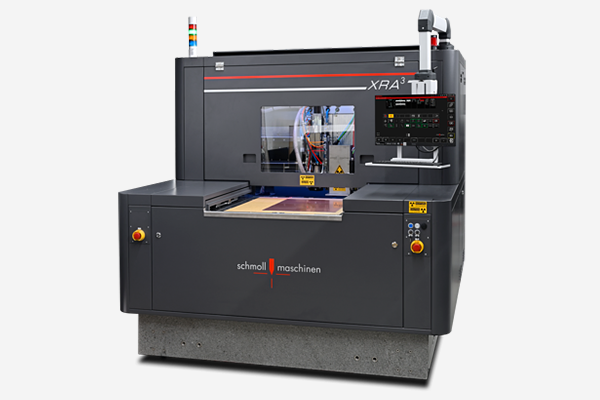
Schmoll XRA³ series x-ray machines come with 70kV microfocus x-ray source and high-resolution CMOS detector, detects PCBs and enables precise referencing and processing by integrated drilling units. Are for multilayer and innerlayer PCBs. Patented flex-table mounting plate is said to ensure PCB registration due to full-surface vacuum system. Linear motor technology in all axes for system availability and minimal maintenance costs. Comes as manual or fully automatic. XRA³ handles panels up to 710 x 762mm; XRA³ XXL handles 813 x 1219mm.
Schmoll
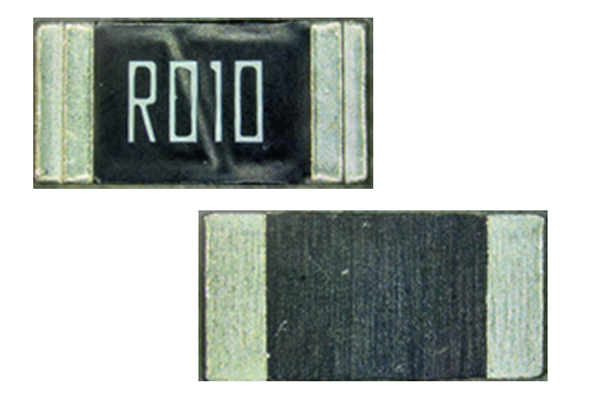
Stackpole CSSU2512 Resistor
CSSU2512 has a 5W power rating in standard 2512 footprint, using an all-metal element and thermally conductive structure to minimize resistance heat-rise. Delivers 5W performance comparable to lower-rated 3W chips, with resistance options from 1–10mΩ, 1% tolerance and 50ppm TCR.
Stackpole Electronics
CA
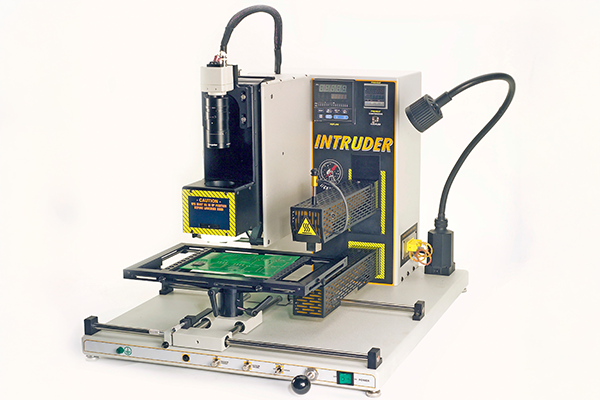
A.P.E. Intruder BGA Rework Station
Intruder is a complete hot air BGA rework station with split vision placement/removal capability. Comes with own separate computer (control) station. Features integral split vision placement and removal capability.
APE
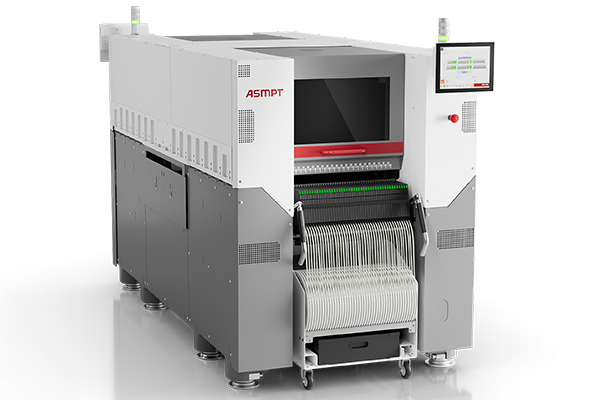
ASMPT Siplace V Placement Platform
Siplace V placement platform has a new machine frame and efficient linear drives and measuring systems with increased resolution. Placement heads can now be changed during operation via a central head interface. CP20 placement head places up to 52,500cph with a precision of 25µm @ 3σ). Switches between collect-and-place, pick-and-place and mixed modes via software. Twin VHF placement head handles parts up to 200x150x28mm with up to 100N. Handles components down to 016008M. Come in single or dual gantry versions and can be configured with single or dual conveyors.
ASMPT
Technical Abstracts
In Case You Missed It
Additive Manufacturing
“Additively Printed Circuit Performance of Thermoformed In-Mold Electronics for Automotive Applications”
Authors: Pradeep Lall, Aditya Harsha, Shriram Kulkarni and Scott Miller
Abstract: The design and production of electronic components, especially in the automobile sector, could be completely transformed by in-mold electronics (IME), a revolutionary technology. IME provides benefits including better weight reduction, improved aesthetics and increased space efficiency by facilitating the smooth integration of electronic circuits into intricate three-dimensional surfaces. Nevertheless, despite their increasing use, thorough research on the electrical properties of IME circuits is still lacking, especially for those made with screen-printing methods on polycarbonate (PC) substrates that are then thermoformed. It is still unclear how important manufacturing factors, such as substrate deformation, ink conductivity, and mechanical stress, affect circuit performance. The purpose of this study is to look into how the electrical performance of IME circuits made for automotive applications is affected by screen-printing and thermoforming settings. This study offers important insights into the viability and dependability of IME technology in actual automotive settings by examining resistance fluctuations, capacitance stability, and overall circuit performance both before and after thermoforming. The results facilitate IME’s wider implementation in next-generation vehicle electronics by advancing understanding of its design and optimization. (Journal of Electronic Packaging, Nov. 29, 2025, https://doi.org/10.1115/1.4070511)
Read full article